
No products in the cart.
Ayurveda
Abhyanga Explained: Why Warm-Oil Ayurvedic Massage Is Ideal for Stress And Tired Muscles
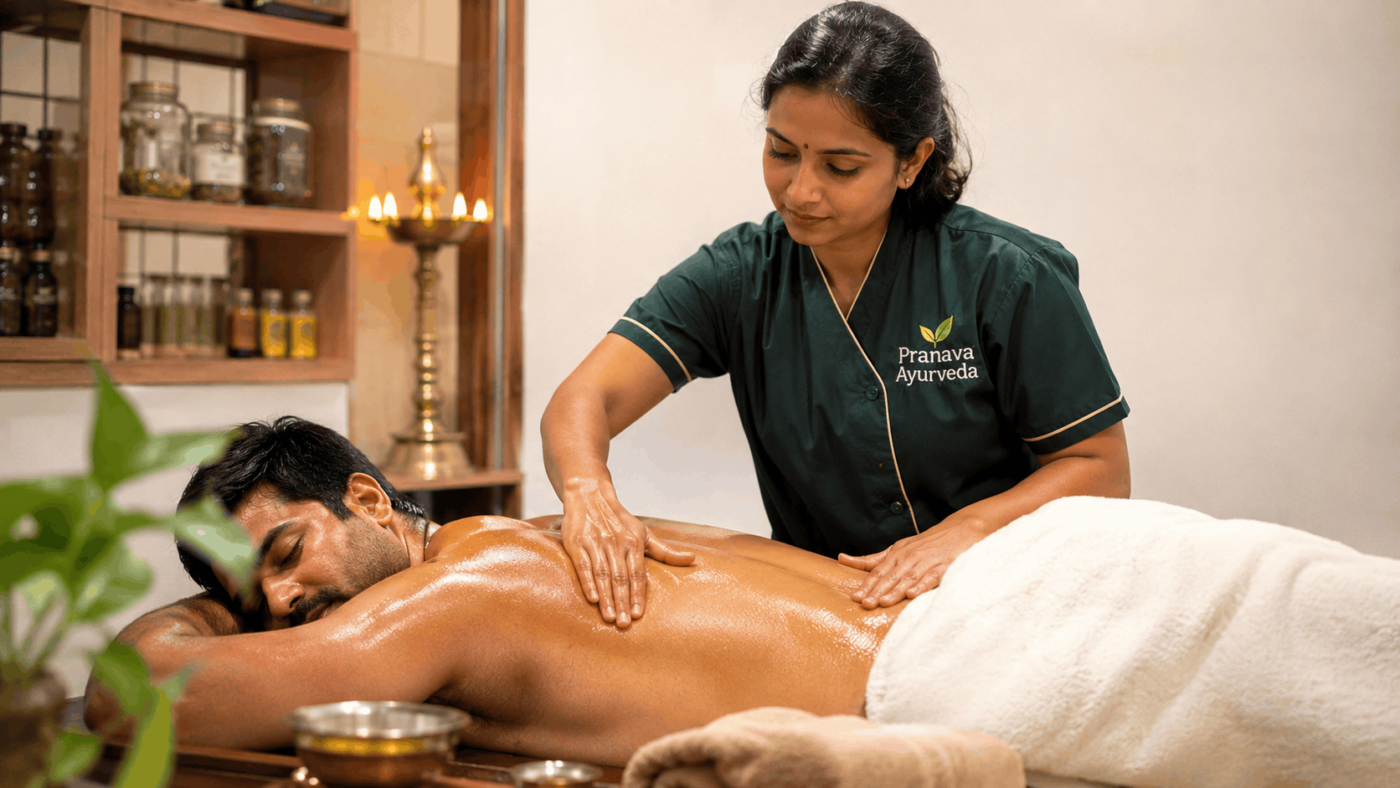
Abhyanga is an Ayurvedic warm-oil full-body massage designed to soothe the nervous system, nourish body tissues, and ease muscle stiffness. It combines warm herbal oils with rhythmic strokes that penetrate deeply, pacify Vata, enhance circulation, and promote toxin release.
Key Takeaways:
- Abhyanga relieves stress: Warm oil and gentle movements help you relax and unwind.
- Soothes tired muscles: Rhythmic massage may ease muscle tightness and stiffness.
- Nourishes the body: Ayurvedic oils are chosen to suit your skin and individual needs.
Your shoulders feel sore, your mind just will not slow down, and even after a full night in bed, you still do not feel well-rested.
If this sounds familiar, you might be looking for something gentler than a deep-tissue massage. This is where Abhyanga, an ancient Ayurvedic oil massage, comes in.
In this guide, we will explore what an Abhyanga massage is, how warm oil may help you relax and ease tired muscles, which oils are commonly used, and what you can expect during a session.
This guide is brought to you by the practitioners at Pranava Ayurveda, an Ayurvedic clinic in Harrow, North-West London.
What Is Abhyanga? Discover The Benefits Of A Warm Ayurvedic Oil Massage For Stress Relief And Muscle Relaxation
Abhyanga is derived from two words in Sanskrit- Abi meaning ‘towards’ and Anga meaning ‘the body’. Together, the words imply the act of nourishing the body with oil.
In Ayurveda, though, Abhyanga is more than just a massage for relaxation; it is a form of self-care as chronicled in ancient Ayurvedic texts like the Charaka Samhita.
So, how does it differ from a normal spa massage?
- Warm oil: The oil is taken in warm condition before applying on the body.
- Slow-motion massage: The expert therapist performs slow and rhythmic strokes, focusing on specific body parts through the arms, legs, and parts of the back.
- Personalised approach: The therapist keeps the dosha (either Vata, Pitta or Kapha), the person’s issues, and lifestyle in mind before choosing the oil and the amount of pressure.
The main objective is not just to massage the body but to take care of it as a whole while helping the person relax and feel comfortable.
Why Warm-Oil Massage Can Help You Feel Less Stressed
Stress doesn’t just affect your mind. It can leave you with tight shoulders, a clenched jaw, a stiff neck, or nights when you struggle to switch off.
Abhyanga offers a gentle way to unwind.
- The warmth helps you relax. Warm oil on the skin can feel comforting and may help ease muscle tension, making it easier to settle down.
- The slow movements encourage calm. The steady, predictable strokes can help you feel more relaxed and give your body a break from the constant rush of daily life.
- It follows an Ayurvedic approach to stress. Ayurveda often links stress and restlessness with Vata dosha. Since Vata is associated with qualities such as dryness, lightness, and movement, warm oil and gentle massage are traditionally used to bring a sense of balance.
- It gives you time to pause. Sometimes, simply taking an hour away from work, screens, and everyday responsibilities can make a difference to how you feel.
But Abhyanga isn’t just about calming your mind. The warmth of the oil and gentle massage movements may also help ease physical tension, making it a soothing option when your muscles feel tired, tight, or stiff after a long day.
How Abhyanga Can Help Tired, Stiff Muscles
When you spend a lot of time sitting down, travelling far, or exercising vehemently, you may find your muscles feeling stiff or heavy and even unpleasant. By the end of the working day, you might feel stiff shoulders, aching back, or weary legs.
A warm-oil Ayurveda Abhyanga massage can provide you with a beautiful way to relax.
The warm oil makes massage easier to perform because it prevents any friction from happening when the therapist applies smooth, long, and flowing strokes. It is also known that warm oil helps to increase the comfort of the procedure.
The use of both warm oil and gentle massage helps relieve muscle tension. It improves local blood circulation in the area being treated, although the effects can be different. It also makes you feel relaxed from a physical viewpoint.
Gentle motions and massage can bring some relief to tired or stiff muscles. However, if you suffer from a specific cause of muscle tension, you may require some other treatment.
The oil used during Abhyanga matters just as much, as different oils are traditionally chosen to suit your body, skin type, and individual needs.
Abhyanga Oil: Which Oils Are Usually Used?
Oil selection is a key factor in Abhyanga treatment because various oils are used in Ayurveda according to a patient’s constitution, skin type, and current condition.
The good news is that there is no one Abhyanga oil suitable for all.
Your therapist will help you select which oil suits you best.
| Type of oil | Traditionally used for | Reason for selection |
| Sesame oil | Vata problems, dryness, and stiffness | Known to be heating and nourishing in Ayurveda |
| Coconut oil | Pitta problems plus sensitive and warm skin | Traditionally known for its cooling properties |
| Light warming herbal oils | Kapha problems plus heaviness and lethargy | They are selected because of their heating and stimulating effect |
| Medicated herbal oils including Ksheerabala and Dhanwantharam | Particular muscular problems, joint issues, etc. | These are made of herbal decoctions for known purposes according to Ayurveda |
Table 1: Types Of Oil Used In Abhyanga
Individual needs determine the selection of an oil to use in Abhyanga, and Ayurvedic treatments should not be regarded as medically proven.
Note: Let your massage practitioner know about your allergies, in particular any sesame allergies, as well as any pertinent allergies to the oil ingredients. If you have sensitive skin, ask the practitioner if patch testing is a good idea. Be careful because untrained use of medicated oils can worsen your condition. A trained professional can suggest the right oil for you.
What To Expect During An Abhyanga Massage At Pranava Ayurveda
If you have never had an Abhyanga experience, then you may be wondering how the process works.
At Pranava Ayurveda, we make every effort to ensure that you feel comfortable and relaxed right from the point you enter.
- During the initial consultation, an expert practitioner talks to you about how you feel, what stresses you out, what your sleep pattern is, and whether there is any pain in your muscles. This step also involves discussion on taking any other medication and what is your general health status.
- The next step includes the practitioner choosing the oil that suits your needs according to the Ayurvedic assessment and warming it up.
- The third step includes a full-body massage, including your back, legs, and arms. Pressure application can vary depending on the kind of treatment and the person.
- In some of the sessions, Bashpa Sweda (a traditional Ayurvedic steam treatment) is used. However, you may want to check with your practitioner whether it is included in your session.
Now that you know what happens during an Abhyanga session, a little preparation can help you feel more comfortable and make the most of your experience.
How To Prepare For Your Session
A few simple steps can help you feel more comfortable.
Before your massage:
- Avoid eating a heavy meal just before your appointment.
- Drink enough water throughout the day.
- Tell your practitioner about any health concerns, allergies, or areas that feel uncomfortable.
After your massage:
- Give yourself some time to relax if your schedule allows.
- Drink water as you normally would.
- Wear comfortable clothes, as some oil may remain on your skin.
If you would like to explore other Ayurvedic treatments, we also offer options such as Padabhyanga (foot massage), Shiro Abhyanga (head massage), and Udvartana (herbal powder massage). Ask us which treatment may best suit your needs.
Abhyanga Vs Swedish Vs Deep Tissue Massage: What Is The Difference?
Not all full-body massages feel the same. The right choice depends on whether you want gentle relaxation, a traditional Ayurvedic treatment, or more focused work on tight muscles.
| Feature | Abhyanga | Swedish massage | Deep tissue massage |
| Origin | Traditional Indian Ayurveda | Western massage practice | Western massage practice |
| Oil used | Warm oil, sometimes herbal and selected for you | Usually massage oil or lotion | Varies; oil or lotion may be used |
| Pressure | Usually gentle to moderate | Usually light to moderate | Often firmer and more focused |
| Main approach | Ayurvedic principles and individual needs | General relaxation and muscle comfort | Targeted work on deeper muscle tension |
| May suit people looking for | A calming, oil-based treatment | A relaxing full-body massage | Focused attention on particular areas of tightness |
| How you may feel afterwards | Relaxed, with soft, oil-coated skin | Relaxed and refreshed | Looser in some areas, although temporary soreness can occur |
Table 2: Abhyanga vs Swedish vs Deep Tissue Massage
If you are looking for a warm, gentle treatment that gives you time to unwind, Abhyanga may be a good option. If you prefer stronger pressure on specific areas, deep tissue massage may be worth considering instead.
The best choice depends on your comfort, preferences, and any health concerns.
Who Should Be Careful Before Having Abhyanga?
Abhyanga is generally a soothing therapy. However, it should not be assumed that it is appropriate for everybody in every circumstance. It is wise to consult your healthcare practitioner or doctor prior to booking an appointment for Abhyanga, especially if:
- You are pregnant, in which case someone deemed qualified to do so must make changes to the treatment.
- You are taking anticoagulants or have any type of bleeding or coagulation disorder.
- You have undergone surgery recently.
- You have a fever, active infection, or broken or irritated skin.
You have suffered from an injury recently or have some existing illness which can interfere with the effectiveness of Abhyanga.
In case you are unsure whether you should go for the treatment, it is better to ask about it before your appointment. It is important to remember that Abhyanga therapy can form a part of a broader self-care routine, but it should not be regarded as replacing medical checkups or treatments.
Looking For An Abhyanga Massage Near You In Harrow, North-West London?
If daily stress, fatigued muscles, or the sensation of always being active has caused you to want some “me-time,” an Ayurveda Abhyanga massage might be worth considering.
You may be searching for “Abhyanga massage near me”. Pranava Ayurveda welcomes clients from Harrow, Kenton, Wembley, Pinner, Stanmore and across North-West London.
You can see our prices, treatment packages, and more information about Abhyanga at Pranava Ayurveda in order to make the right choice.
Summary
Abhyanga is a traditional Ayurvedic oil massage that combines warm oils and gentle movements to promote relaxation and ease muscle tension. Swedish massage focuses on general relaxation, while deep tissue massage uses firmer pressure to target muscle tension. The best choice depends on your comfort, preferences, and individual needs. You can enjoy this calming treatment of Abhyanga at Pranava Ayurveda in Harrow, London.
Ready To Melt Away Stress And Revitalise Your Tired Muscles With Authentic Kerala Wisdom?
Do not let daily burnout drain your vitality. Book your personalised Ayurvedic Abhyanga massage consultation at Pranava Ayurveda Clinic in Harrow, London, today. Experience true healing, restore your natural dosha balance, and embrace long-term well-being now. Contact us today!
Frequently Asked Questions
What Will Happen If My Longstanding Stress And Persistent Tension Do Not Respond To Conventional Massage Techniques?
Standard relaxation massages address only superficial muscle layers, whereas our specialised therapeutic Abhyanga at Pranava Ayurveda Clinic utilises tailored warm herbalised oils that penetrate deep tissues, soothing the nervous system whilst treating the issues of long-term physical and mental fatigue.
Can An Abhyanga Treatment With Heavy Oils Cause Some Unwanted Side-Effects Or Skin Irritation?
If the therapeutic oils approved for your treatment do not meet high-quality standards, or if there are improper techniques involved, it may lead to skin congestion or discomfort.
Our highly qualified practitioners from Pranava Ayurveda Clinic determine your body constitution first and then choose pure, high-quality therapeutic oils suitable for best results in terms of nourishing your skin and relaxing your body.
How Can I Cope With Excessive Daily Stress If My Busy Schedule Gives Me No Time To Do Thorough Wellness Practices?
It is hard to make time for yourself when you have so many responsibilities to deal with in both your work and personal life. Abhyanga treatments at our clinic efficiently reset your nervous system and relieve muscles, while fitting into your tight schedule.
What Will Happen When Normal Abhyanga Therapy Does Not Help With My Chronic Joint Stiffness As Well As Deep Muscle Pain?
Standard oil treatments for a complete body massage may not settle localised, serious muscular and skeletal pain. However, at our clinic we offer a very effective way of treatment called Sarvanga Abhyanga and also some types of Vasti treatments, provided that the pain is located in a specific place in the body (Kati Vasti for lower back pain or Janu Vasti for knee pain).
In addition, we provide some types of herbal treatments with the request of Choorna Pinda Sweda taking into consideration to penetrate deep into affected joints and tissues.
What Could Be The Reason Behind My Upper Back And Shoulder Muscles Being Tense And Exhausted Even Though I Use Oil Treatment At Home On A Regular Basis?
Massage and commercially available oils do not possess the necessary healing strength, special techniques, and herbal formulas to resolve long-lasting muscle tension. We use special herbal oils that we apply when performing our Shiro Abhyanga and Sarvanga Abhyanga therapies for maximum results.