
No products in the cart.
Ayurveda
Ayurveda for Stress and Burnout: How Ancient Practices Fit a Busy City Life
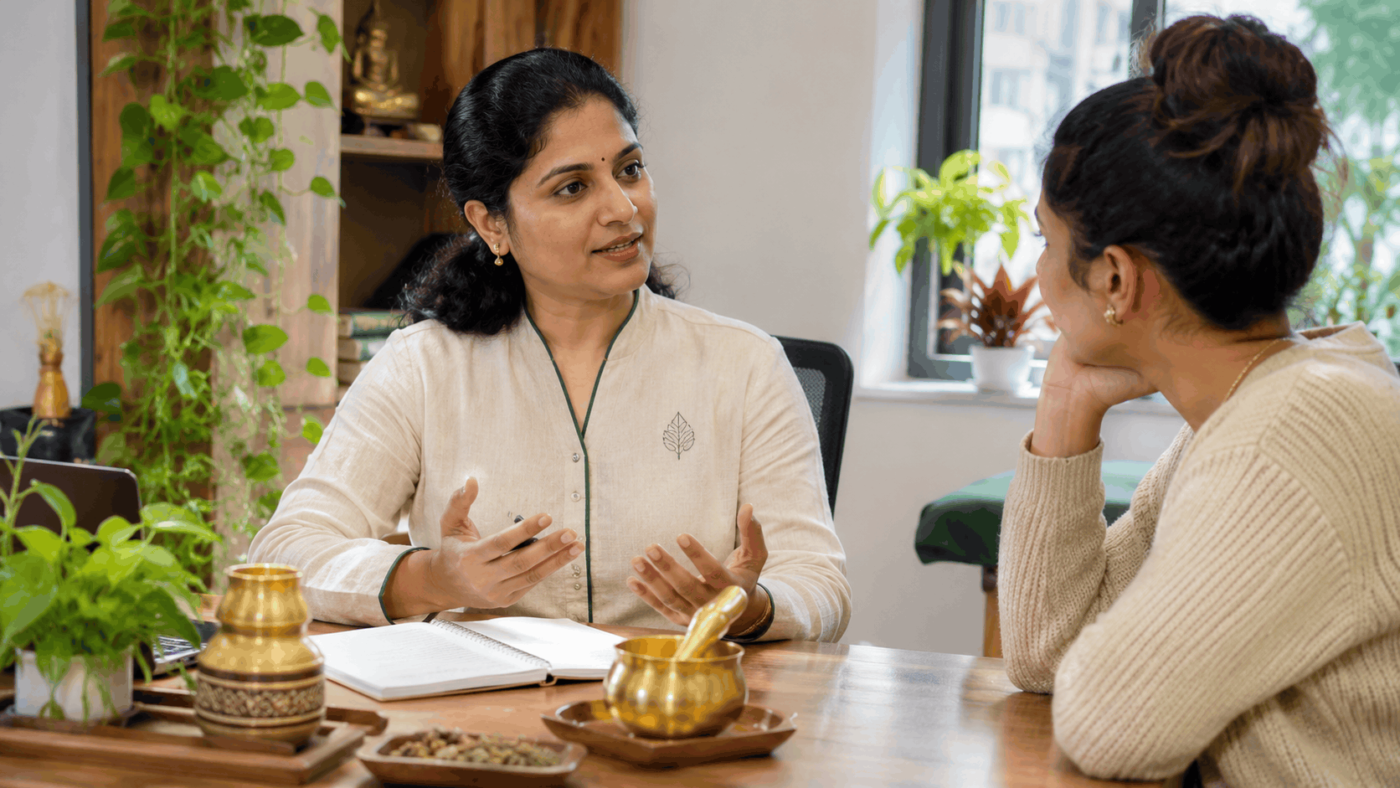
According to Ayurveda, stress and burnout are thought to be a serious imbalance of Ojas (our life’s vital energy) as well as an excessive activation of Vata (the energy of movement and air). The nervous system gets affected, during challenging times with lots of deadlines that need to be met, notifications buzzing, and an acceleration of city life, which may lead to exhaustion.
Key Takeaways:
- Manage daily stress: Simple Ayurvedic habits can help bring more balance to a busy city lifestyle and manage daily stress.
- Ayurveda offers a traditional approach to managing stress and burnout through daily routines, mindful breathing, balanced meals and relaxing treatments.
- An Ayurveda consultation and personalised support can help you explore suitable routines and treatment options for your needs.
While city burnout appears to be unavoidable, ancient wisdom could grant you assistance in overcoming it. Meeting pressing deadlines and suffering from a massive flow of information takes a toll on your energy.
Find out more about how alternative methods inspired by ancient Ayurvedic practices, including adaptogenic herbs and grounding simple rituals, can be used while living in the city.
Ayurveda For Stress Relief And Burnout: Blending Ancient Wisdom With Modern City Life
Your alarm clock goes off and your mobile device is already full of notifications. By noon, you might notice that your body feels tense and your mind weary. Does that resonate?
You are not alone in your situation. As per the Health and Safety Executive in Britain, there were about 964,000 workers who experienced work-shared stress, anxiety, and depression in 2024/25. It should be noted that these difficulties resulted in the loss of roughly 22.1 million working days.
Due to the job demands, long commutes, and the continuous pressure to stay connected to the world, people often forget to care for themselves.
Hence, Ayurveda comes into the picture. Ayurveda is the ancient medical practice of India where the focus is on being observant and aware of what the body goes through as part of its daily routine, instead of simply treating the symptoms of related illnesses.
And you will be amazed to know that you do not have to travel across continents to take advantage of Ayurveda. Even a small change to your daily routine in London can make a big difference in your everyday life.
How Does Ayurveda Understand Stress And Burnout?
The concept of Ayurveda comes down to understanding our health through the notion of dosha. These doshas, which include Vata, Pitta, and Kapha doshas, represent three energies that have different effects on our bodies and minds.
According to Ayurveda, stress can amplify different patterns of behaviour.
- Vata: You are always preoccupied, feel anxious, suffer from insomnia and suffer from digestive issues.
- Pitta: You feel easily irritated, demand perfection of yourself, have constant headaches, and tend to lose patience sooner afterwards.
- Kapha: Feeling lethargic, demotivated and isolated.
In Ayurveda, the impact of a fast lifestyle can worsen the two doshas, Vata and Pitta. Constant hurry, eating irregularly, and lacking rest bring physical and mental exhaustion. Finally, ojas is an Ayurveda term that refers to health and vitality. According to Ayurvedic practitioners, chronic stress leads to depletion of ojas.
Why Ayurveda Can Fit Into A Busy City Lifestyle
One of Ayurveda’s key concepts is the need for routines. Its traditional daily routine is called dinacharya and advocates for the formation of simple habits in your daily life.
You do not have to change your entire lifestyle or devote hours to self-care. Instead, focus on three small things: how you start your mornings, what you do during your lunch breaks, and how you wind down at night.
- In the mornings: Take a moment before taking a dive into emails and notifications. Open your curtains to get some sunlight and start your day with ease.
- At lunchtime: Go eat away from your desk. Just a quick break from your laptop will ease your stress dramatically.
- In the evening: Make a clear distinction between the work time and the time of relaxation. Keep your phone away, take a warm shower or relax by doing something enjoyable for a few minutes.
Regardless of the kind of work you do, whether you are working from home, going to the office or taking care of your family duties, you can introduce these little routines into your life.
The aim is not to make the list any longer. Instead, we are actually trying to make your day look a bit easier.
These little daily habits will allow you to manage some time for yourself, but it would also be important to acknowledge what you are going through.
Are you struggling with everyday stress, constant tiredness, or a more serious issue, such as an anxiety disorder? Understanding the difference can help you to figure out what kind of help you need in this situation.
Stress, Burnout Or Anxiety: What Is The Difference?
People often use the words stress, burnout and anxiety interchangeably, but they do not mean quite the same thing.
- Stress is your body’s response to pressure. You may feel tense, distracted or overwhelmed. These feelings can ease when the situation causing the stress improves, although stress can also persist.
- Burnout often happens when work-related stress continues for a long time without being properly managed. The World Health Organization classifies it as a workplace-related phenomenon rather than a medical condition.
- Anxiety disorders, on the other hand, involve ongoing or overwhelming feelings of fear and worry that can affect your daily life. A healthcare professional can help assess what is happening and recommend appropriate support.
Speak to your general practitioner, if you are struggling for a longer period of time and your symptoms are becoming hard to manage.
Understanding what you are going through is the first step towards feeling better. If you are considering Ayurveda for stress and burnout, a consultation will help you explore your concerns and possible treatment options based on your individual needs.
What Happens During An Ayurveda Consultation?
If you have never had an Ayurveda consultation before, you might be surprised by how much time is spent talking about your everyday life.
Rather than looking at one concern in isolation, a practitioner will usually ask about different aspects of your health and routine, including:
- Your sleep, mood, energy levels and digestion.
- Your eating habits, work schedule and daily activities.
- Your medical history and any medicines you’re currently taking.
- Traditional observations, which may include examining your pulse and tongue.
Using this information, the practitioner may assess your prakriti (your Ayurvedic constitution) and vikriti (your current state of imbalance) within the traditional Ayurvedic framework.
They can then suggest a plan based on your individual needs. This may include changes to your daily routine, dietary guidance, traditional treatments and, where appropriate, herbal preparations.
Ayurvedic practice starts with the Ayurvedic Full Consultation at Pranava Ayurveda. Follow-up consultations allow us to go through your case and discuss the necessary changes. We provide Specialist Treatment Packages for the clients who require a more personalised approach.
If you are planning to visit us, do not forget to prepare a list of your current medications and supplements.
Ayurveda Treatments That May Help You Unwind
Sometimes, what you need most is a little time to slow down. Ayurveda treatments often involve gentle, hands-on techniques that are designed to create a calming and restful experience.
Here are some treatments you may come across-
Shirodhara involves gently pouring a steady stream of warm oil over the forehead while you lie comfortably on a treatment bed. Many people find the experience relaxing and meditative.
Abhyanga is a traditional Ayurvedic massage that involves applying warm oil, sometimes blended with herbs, to the body. It is often used to promote relaxation and is traditionally believed to help balance Vata.
Curious about how it compares with a sports or deep tissue massage? Read our guide to Abhyanga vs Deep Tissue Massage to understand the differences.
Shiro Abhyanga And Padabhyanga
These therapies are targeted at different parts of your body. While Shiro Abhyanga means massage of the head, Padabhyanga means massage of the feet. If your preference is for shorter therapies, rather than a full body massage, these treatments can be a viable option.
Nasya Karma is an Ayurvedic procedure wherein some medicinal compounds, often in the form of oils, are applied through the nostrils of your nose. It has been particularly associated with brain-related problems and improving mental clarity.
At Pranava Ayurveda, we like to be transparent about what such treatment can and cannot do. While our expert practitioners can provide some relaxation as part of an overall regimen of self-care, there really is little scientific justification to support their effectiveness.
Simple Remedies For Stress And Anxiety You Can Try Today
You do not need a complicated wellness routine to start taking better care of yourself. Often, small habits that you can maintain are more helpful than big changes that last only a few days.
Here are seven simple ideas to try during a busy week-
- Wake up at a regular time.
- Make time for regular meals.
- Try a short oil massage.
- Slow down your breathing.
- Give yourself a break during your commute.
- Create a relaxing bedtime routine.
- Keep one evening for yourself.
These remedies for stress and anxiety can be a helpful part of a daily routine that supports overall physical and mental well-being.
A Word of Caution About Ayurvedic Herbs
You could have heard herbal plants like ashwagandha and Brahmi being used in Ayurveda for stress relief and general well-being. Although these herbs might be considered natural support systems for health, that does not mean that they are safe for everyone.
In the UK, a lot of products made from ashwagandha are being sold as food supplements rather than medicines approved by the MHRA, which means that they might not be of high quality or strong enough.
In addition to that, ashwagandha may be associated with rare cases of liver injury and is not advised for pregnant women or people suffering from some thyroid or liver problems. It can also have a negative impact on other medications that a person may be taking.
It is very important to consult your doctor or pharmacist or a specialist before taking any herbal supplements, especially if you are taking any other medicines or suffer from health issues. Suspected side effects of any drugs or appropriate products may be reported via the MHRA Yellow Card system.
Here is a list of ayurvedic treatment options you may consider-
| Treatment / Remedy | Primary Ayurvedic Mechanism | Target Symptom / Goal | Safety Considerations & UK / MHRA Cautions |
| Shirodhara | Steady stream of warm oil over the forehead | Deep relaxation, calming the nervous system | Generally safe, verify oil temperatures and allergies |
| Abhyanga | Full-body massage using warm herb-infused oils | Balancing Vata, relieving deep muscle tension | Professional assessment needed for acute injuries or skin conditions |
| Ashwagandha | Adaptogenic root support for stress adaptation | Energy restoration, nervous system support | Sold as food supplements in the UK (not MHRA-approved medicines), potential liver injury risks, avoid in pregnancy or thyroid issues |
| Brahmi | Nootropic herbal compound (e.g., Brahmi Ghrita) | Mental clarity, easing deep-rooted tiredness | Must be clinically prescribed, monitor for drug-herb interactions |
Table: Therapeutic Interventions & Herbal Safety Profile
A qualified professional should consult with a patient, find out his or her health history and review potential interactions through medical history.
Note: Never stop prescribed medication or replace medical treatment with an herbal product without discussing it with your healthcare professional.
How To Choose The Right Ayurveda Practitioner
Finding a practitioner you feel comfortable with is just as important as choosing a treatment.
Before booking an appointment, take a moment to check a few things:
- Training and qualifications: Ask about their education, practical experience and relevant qualifications, such as a BAMS degree or equivalent training.
- A proper health assessment: They should ask about your medical history, current symptoms and medicines before recommending treatments or herbs.
- Clear pricing: You should understand the cost of consultations, treatments and any follow-up appointments before you commit.
- Honest advice: Be cautious of anyone who promises a guaranteed cure or claims that one treatment will solve every problem.
- Appropriate medical referrals: A responsible practitioner should encourage you to see your GP when symptoms require medical assessment.
Do not be afraid to ask questions. A good practitioner should welcome them and help you make an informed decision.
When stress starts affecting your sleep, energy or mood, it is worth taking a step back and looking at what your body and mind might need.
At Pranava Ayurveda, our practitioners welcome clients from Harrow, Wembley and across North West London.
Summary
Ayurveda provides a traditional method of tackling stress and burnout. What needs to be done is to adhere to specific daily practices, including relaxation techniques. Small changes in lifestyle can be incorporated into even the busiest schedule of a person living in a metropolis.
Ayurvedic advice will help find individual solutions to the problems experienced by a human being.
Reclaim Your Peace Amidst The Urban Chaos
Experience authentic Kerala Ayurveda at Pranava Kerala Ayurveda Clinic in Harrow, London. Book your Full Consultation today to restore natural balance, alleviate stress, and revitalise your mind and body. Take the first step for holistic wellness now!
Frequently Asked Questions
Is Urban-Dwelling Chronic Stress Going To Leave Lasting Harm On My Nervous System And Immunity Before I Am Able To Unwind?
Chronic stress does not typically cause instant, irreversible destruction, but prolonged exposure can lead to lasting functional and structural changes in the brain and immune system if left unaddressed.
Pranava Kerala Ayurveda Clinic specialises in Ayurvedic Full Consultations and custom herbal treatments such as Abhyanga and Shirodhara to manage Vata and counteract oxidative stress. Our therapies help protect cells and tissues against free radical damage and help restore bodily balance.
Are Urban Professionals Vulnerable To Sudden Anxiety Attacks Or Complete Burnout Caused By Inner-City Pressures That Are Not Managed Properly?
The mix of high-pressure corporate culture, social exclusion, long commutes, and sensory saturation in the city causes unique psychological stress, known by experts as ‘urban distress’. If not resolved properly, the risk of having unexpected panic attacks increases among city employees.
Pranava Kerala Ayurveda Clinic employs specific mental health and stress management treatment techniques, including some unique prescriptions based on cognitive processing techniques called Chintyam and Vicharam. Well-trained Ayurvedic specialists offer counseling tailored to your individual needs to help you cope with ordinary life stresses.
Is It Possible That Long-Term Urban Fatigue Could Result In Severe Issues With Sleep And Chronic Fatigue That Typical Cures Cannot Solve?
Prolonged urban exhaustion can absolutely lead to severe sleep disturbances and chronic physical fatigue that standard remedies fail to fix.
Our clinic offers products such as Brahmi Ghrita and Bala Guduchyadi Kashaya, which are specially compounded according to ancient Ayurvedic texts. These herbal cures give relief from deep-rooted tiredness and promote normal sleeping patterns.
How Is It Possible For People Working In Busy Cities To Follow The Principles Of Ayurveda In A Demanding Place Of Work?
Adapting complex Ayurvedic care to a high-pressure corporate lifestyle requires shifting from a rigid, all-or-nothing mindset to micro-habits.
Our clinic offers structured Ayurvedic Full Consultations and Follow-up Consultations that can fit into your lifestyle. The practitioners develop individual plans of action for the purposes of dealing with daily professional stressors.
What Measures Can One Take To Address Persistent Muscle Tension, Soreness, And Headaches Associated With Urban Jobs That Require Long Hours Of Sitting?
Treatment for a muscle tension headache includes over-the-counter pain relievers, home remedies, targeted self-massage, and preventive prescription options.
Our clinic offers our clients specialised Abhyanga therapy and Dhara treatments right at our clinic in Harrow, London. These treatments involve the use of warmed therapeutic herbal oils, which deliver soothing massages for the body with the concept of providing relaxation and stress relief.