
No products in the cart.
Blog
How Ayurveda Can Support Endometriosis Symptoms
Ayurvedic approaches to endometriosis focus on balancing the body’s doshas, primarily Vata and Pitta. It reduces internal inflammation and clears accumulated toxins (Ama) rather than treating the condition as a standalone, localised issue.
Key Takeaways:
- Ayurveda may help support endometriosis symptoms through dietary changes, gentle therapies, stress management, and healthy daily routines.
- Ayurveda can complement medical care, but it is not a cure for endometriosis and should not replace prescribed treatment.
- Pranava Ayurveda offers a personalized approach to supporting women living with endometriosis through dietary guidance, lifestyle changes, and traditional Ayurvedic therapies.
Living with endometriosis can be exhausting. The pain affects your daily life, your energy, your sleep, and even your emotional well-being. And it can be even more frustrating when it takes years to finally receive a diagnosis.
Along with medical treatment, many women explore endometriosis natural therapy, like Ayurveda, to manage their symptoms and feel more comfortable in their lives.
This guide explains what Ayurveda offers to support endometriosis symptoms.
Balancing Endometriosis Symptoms Using Ayurvedic Principles
Ayurveda takes a whole-body approach and focuses on root cause imbalance. It focuses on diet, lifestyle, traditional herbal remedies, and stress management to support overall well-being. While it cannot cure endometriosis, it may offer additional support alongside medical care.
What Is Endometriosis, and Why Is Diagnosis So Slow?
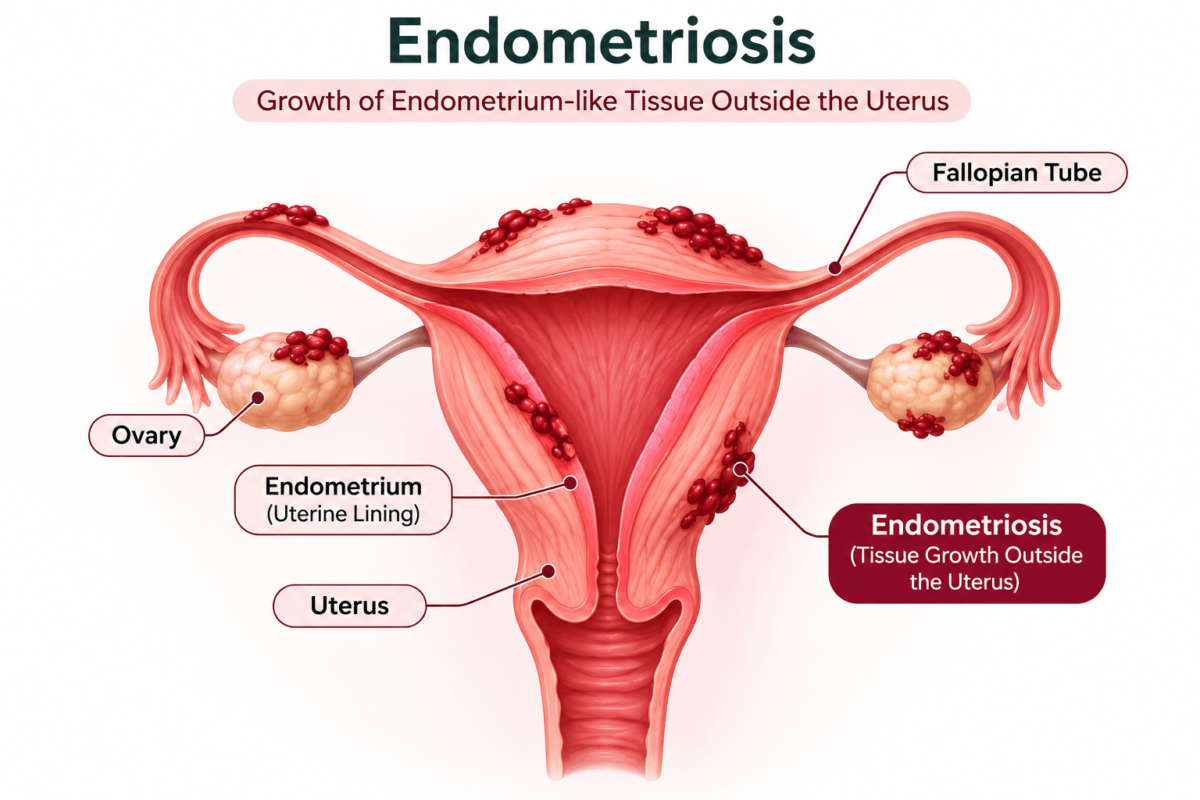
Endometriosis is a condition where tissue similar to the lining of the womb grows in other parts of the body, outside the uterus. This tissue can cause inflammation, pain, and other symptoms that affect everyday life.
Common symptoms include:
- Painful periods and pelvic pain
- Heavy menstrual bleeding
- Bloating and digestive discomfort
- Tiredness and low energy
- Pain during or after sex
About 1.5 million women in the UK live with endometriosis, but getting a diagnosis can take years. The average wait has been reported as around 9 years and 4 months, and it can be even longer for women from ethnically diverse communities.
For many women, this long wait can be physically and emotionally draining. It is understandable that they look for additional ways to manage their symptoms while continuing to seek appropriate medical care.
Endometriosis Treatment In The UK: What Does The NHS Offer?
Medical treatment for endometriosis is required for managing this condition. Depending on your symptoms and individual needs, your doctor may recommend-
- Pain relief medicines like paracetamol or NSAIDs
- Hormonal treatment options like hormone-releasing coils or contraceptive pill
- Keyhole surgery to remove or treat the concerned tissue
The right endometriosis treatment in UK depends on your symptoms, personal preferences, and medical history.
Note: Ayurveda should not replace medical treatment. However, some women choose to explore complementary approaches to support their sleep, stress levels, and comfort.
How Does Ayurveda Understand Endometriosis?
Ayurveda sees health as a balance between the body, mind, digestion and daily practices. Rather than looking at one symptom in isolation, Ayurveda looks at the various elements of a person’s lifestyle that may be responsible for the overall condition of a person’s health.
Ayurveda may not have a particular equivalent for modern medicine’s diagnosis of endometriosis, however some Ayurvedic practitioners claim that they relate its symptoms to the traditional texts such as Yoni Vyapad and imbalance in the body’s doshas.
There are three doshas in Ayurveda: Vata, Pitta and Kapha. Ayurvedic practitioners have a lot to say about Vata and Pitta when it comes to problems related to menstruation.
Here is a simple explanation:
- Vata is traditionally associated with movement in the body. An imbalance is believed to contribute to cramping and discomfort.
- Pitta is associated with heat and transformation. An imbalance is traditionally linked to symptoms such as heat and irritability.
- Ama is an Ayurvedic concept referring to the build-up of improperly processed substances in the body.
These are traditional Ayurvedic concepts, not medically established causes of endometriosis. Modern medicine understands endometriosis as a complex condition involving factors such as inflammation, hormones, and immune-system processes.
The potential value of an Ayurvedic approach lies in its focus on the whole person, including daily habits, stress, digestion, and quality of life.
Five Ways Ayurveda May Support Endometriosis Symptoms
Here are the five ways Ayurveda can support endometriosis symptoms directly-
- A Personalised Ayurvedic Consultation
Every woman experiences endometriosis differently. One person may struggle with painful periods, while another may experience bloating, fatigue, or discomfort throughout the month.
Ayurveda takes these individual differences into account.
During a consultation, an Ayurvedic practitioner may ask about your menstrual cycle, pain patterns, digestion, sleep, stress levels, diet, and medical history.
Traditional Ayurvedic assessments may also consider your natural constitution, known as Prakriti, and your current state of imbalance, known as Vikriti.
At Pranava Ayurveda in Harrow, a consultation can be an opportunity to discuss your symptoms and explore suitable diet and lifestyle recommendations based on your individual needs.
Sharing your endometriosis diagnosis, medical reports, and current medications helps ensure that any complementary endometriosis natural therapy is chosen with care and is safe for you.
- Eating Foods That Support Digestion and Comfort
Food affects your digestive aspects, especially if you experience bloating or digestive discomfort alongside endometriosis. Ayurveda suggests food that is light, freshly prepared, and warm.
Here are some of the common dietary suggestions you may consider-
- Choose soups, cooked vegetables, and stews freshly cooked
- Use ginger, fennel, cumin, and coriander in everyday cooking
- Eat meals at regular times
- Drink enough water throughout the day
- Noticing whether certain foods make your bloating or digestive symptoms worse.
In addition, some females reduce intake of very spicy foods, processed foods, or foods that are hard to digest if they feel these items lead to them feeling uncomfortable. Nevertheless, a universal diet that will work for all endometriosis patients does not exist. These diets do not have the scientific backing to be able to successfully treat symptoms associated with endometriosis.
It is advisable to write down your food intake and any symptoms you are experiencing so that you can share this information with your doctor.
- Exploring Ayurvedic Herbs With Care
Herbs such as turmeric, ginger, and shatavari are commonly discussed in Ayurvedic practice. Some women also explore ashwagandha as part of a broader approach to well-being.
However, herbal products can also have side effects and may interact with prescribed medicines.
For instance, shatavari might produce effects similar to oestrogen and this is significant for individuals with hormone-sensitive disorders. The use of herbal supplements during pregnancy may also vary in relation to safety matters.
If you would like to use any herbal treatment, you need to take the following steps:
- Consult your physician or the pharmacist.
- Inform your Ayurvedic practitioner regarding diagnoses made and medicines you currently use.
- Check the ingredients and quality of the product.
- Do not stop a prescribed treatment in favour of herbal remedies.
Natural does not mean it is always safe. Getting professional advice is especially valuable in managing a serious chronic illness such as endometriosis.
- Trying Gentle Therapies for Relaxation
Some Ayurvedic therapies focus on relaxation, warmth, and easing muscular tension. An expert practitioner may discuss options depending on your symptoms and overall health.
Here are some of the therapeutic treatment you may consider-
Not every therapy is suitable for every person. Discuss the risks with your healthcare professional before proceeding. Avoid any procedure that causes irritation, pain, or worsening symptoms.
- Supporting Your Sleep, Stress Levels, and Menstrual Health
Living with ongoing pain and irritation can impact your life adversely. Stress can also make it harder to cope with pain, even though it does not mean your symptoms are psychological or imaginary.
Ayurveda places importance on daily routines and adapting activities around your menstrual cycle.
A few simple habits may help you feel more comfortable:
- Try to go to bed and wake up at similar times each day.
- Give yourself extra time to rest when your symptoms are worse.
- Try gentle yoga or slow breathing if these feel comfortable.
- Use a warm compress on your lower abdomen for period pain.
- Avoid pushing yourself through activities when you need a break.
Gentle movement and relaxation may help support your quality of life, but they are not a replacement for medical treatment.
The most important thing is to find a routine that works for you rather than feeling pressured to follow a strict set of rules.
Ayurveda should not be presented as a cure for endometriosis. But, it is best to approach endometriosis natural remedies with realistic expectations. The goal should be to find safe ways to support your comfort and quality of life while continuing appropriate medical care.
How to Combine Ayurveda With Endometriosis Treatment Safely
If you want to explore Ayurveda, you do not necessarily have to choose between traditional and modern approaches. The key is to make sure that any complementary care works safely alongside your medical treatment.
Here are a few steps to consider:
- Speak to your GP. Explain your symptoms and ask about appropriate investigations, referrals, and treatment options.
- Continue your prescribed treatment. Do not stop or change your medication without medical advice.
- Choose a qualified Ayurvedic practitioner. Look for someone who understands the importance of working alongside conventional healthcare.
- Share your medical history. Include your diagnosis, medication list, allergies, and any previous surgery.
- Make changes gradually. Introduce one dietary or lifestyle change at a time so you can see how you respond.
- Review your progress. Keep track of pain, bleeding, digestion, sleep, and energy levels, and discuss any changes with your healthcare team.
A combined approach should make your care more supportive, not more complicated or risky.
Here are the ways complementary Ayurvedic support will enhance overall wellbeing during endometriosis-
| Aspect / Focus Area | Conventional NHS Medical Approach | Complementary Ayurvedic Support | Combined Strategy |
| Primary Goal | Pathological control, structural removal, symptom relief | Balancing body energetics (Doshas), digestive comfort, stress reduction | Manage disease progression medically while improving day-to-day quality of life |
| Pain Management | NSAIDs, Paracetamol, hormonal suppression | Warm compresses, soothing oil applications (Kati Vasti), stress reduction | Use prescribed pain relief as advised; use Ayurvedic warm therapies to calm muscle tension |
| Hormonal Health | Contraceptive pills, GNRH analogues, hormonal IUD | Dietary adjustments to minimise digestive inflammation & support liver function | Maintain hormonal therapies prescribed by your doctor; support overall metabolic balance through diet |
| Surgical Intervention | Keyhole laparoscopic removal of endometrial tissue | Not applicable (Ayurveda does not perform surgery) | Pre- and post-surgery supportive care focusing on rest, gentle nutrition, and stress management |
Table: Conventional NHS Care vs. Complementary Ayurvedic Support
What to Expect During Your First Ayurvedic Consultation
If you have never visited an Ayurvedic practitioner before, it is natural to wonder what the appointment will involve.
A consultation will generally begin with a conversation about your health, symptoms, and concerns.
You may be asked about:
- Your menstrual cycle and pain patterns
- Your digestion, appetite, and usual diet
- Your sleep, stress levels, and daily routine
- Your medical history and current medications
- What you hope to improve through complementary care
Some practitioners may also use traditional Ayurvedic assessments, such as pulse examination.
Based on this discussion, they may suggest dietary changes, lifestyle adjustments, or other complementary approaches. Herbal products and therapies should only be considered after assessing their suitability and safety.
You can bring your NHS letters, scan reports, and medication list to help make the discussion more useful.
Most importantly, you should feel comfortable asking questions and discussing your concerns without feeling pressured to try a particular treatment.
Final Thoughts
Endometriosis can affect your overall well-being and increase your stress, influencing your energy, sleep, digestion, and relationship aspects. Ayurveda is particularly helpful in this case, offering a traditional, whole-person approach.
It starts with small, manageable changes, focusing on diet, relaxation, daily routines, and individual needs.
Ready To Reclaim Your Cycle And Relieve Deep-Seated Pelvic Discomfort Naturally?
Discover authentic, classical Ayurvedic care tailored specifically to your body’s unique needs. Book your Ayurvedic full consultation with us in Harrow today. Start your path toward lasting relief with certified, experienced specialists you can trust!
Frequently Asked Questions
Where Can I Find Support For Ongoing Period Cramps And Pelvic Pain Caused By Endometriosis?
At Pranava Ayurveda, get access to customised Ayurveda services to help minimise the symptoms of endometriosis. Based on your requirements, you may be recommended Ayurvedic therapies by our practitioners, including Vasti Chikitsa and other types of Panchakarma therapies to relieve your pain and promote your wellness.
Where Can I Find Personalised Ayurvedic Care For Women’s Health Concerns In The UK?
We offer an initial full consultation, follow-up appointments, and personalised treatment plans based on your individual needs. Our practitioners will suggest traditional therapies like Kati Vasti, Abhyanga (oil massage), and Bashpa Sweda (herbal steam therapy) as part of your care, depending on your health and symptoms.
What If My Pelvic Pain And Hormonal Concerns Are Not Properly Addressed By Conventional Treatment?
If you feel your symptoms are not being fully addressed, our clinic offers personalised Ayurvedic consultations to help you explore additional support for your well-being. Our experienced practitioners assess your health, symptoms, and medical history before recommending suitable traditional Ayurvedic approaches. This care can complement conventional treatment but should not replace medical advice or proven treatments.
Could Delaying The Right Care Make My Gynaecological Symptoms Worse?
Persistent pelvic pain and menstrual problems deserve timely medical attention. At our clinic, you can explore personalised Ayurvedic care, which may include traditional therapies such as Yoni Pichu, Yoni Dhavana, Yoni Dhupana, and Uttara Vasti, where appropriate.
These therapies are carefully practised by qualified professionals. Advice from your GP or gynaecologist should also be followed.
How Can I Feel Confident That The Ayurvedic Care I Choose Is Safe And Authentic?
Choosing a qualified practitioner is an important step when exploring Ayurvedic care for menstrual and reproductive health concerns. Before starting treatment, ask about the practitioner’s qualifications, professional registration, the ingredients used in herbal products, and any possible risks or interactions with your current medication.
Our clinic offers traditional Ayurvedic consultations and therapies tailored to individual needs.